

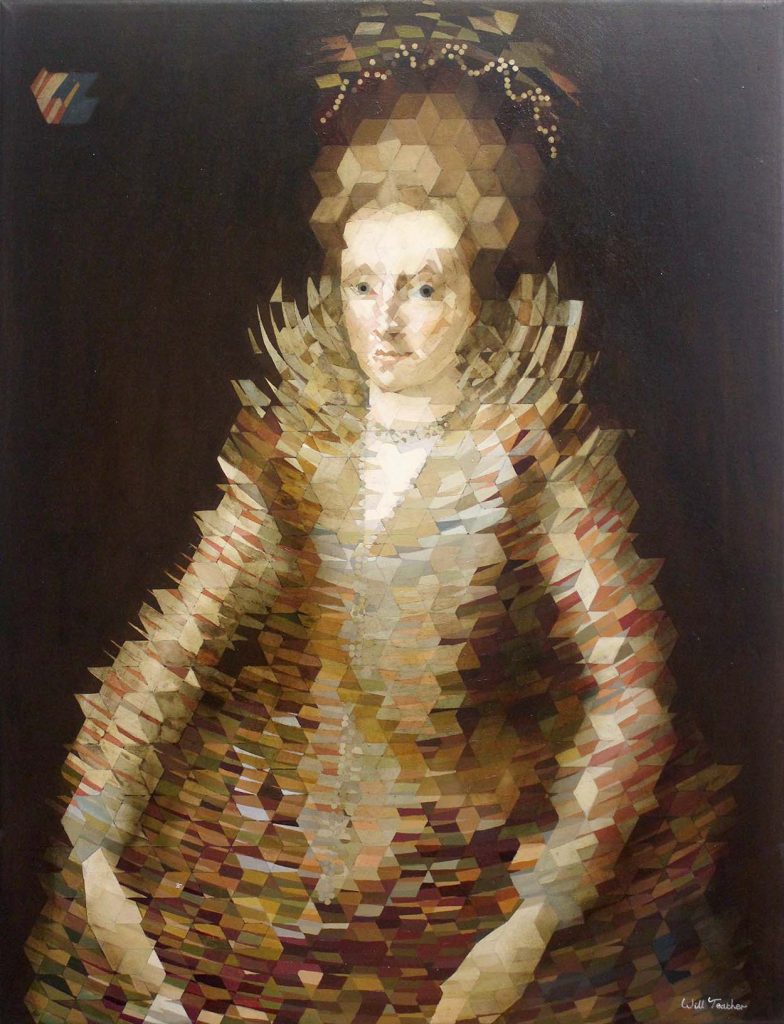
New compositions reinterpret principles of sacred geometry within visual art, creating complex patterns based upon the underlying structure of representational images, revealing perhaps a divine form within the natural world. The artist explains:
“These lattices reference both postmodern pixilation within painting, as influenced by digital culture, and the longstanding idea of an underlying order within both visual art and our wider perception of reality. They are also informed by the obsessive exploration of geometric patterns by the outsider painter Eugene Andolsek and the automated techniques of Sol Lewitt, who would pass instructions onto assistants who then created his drawings.”


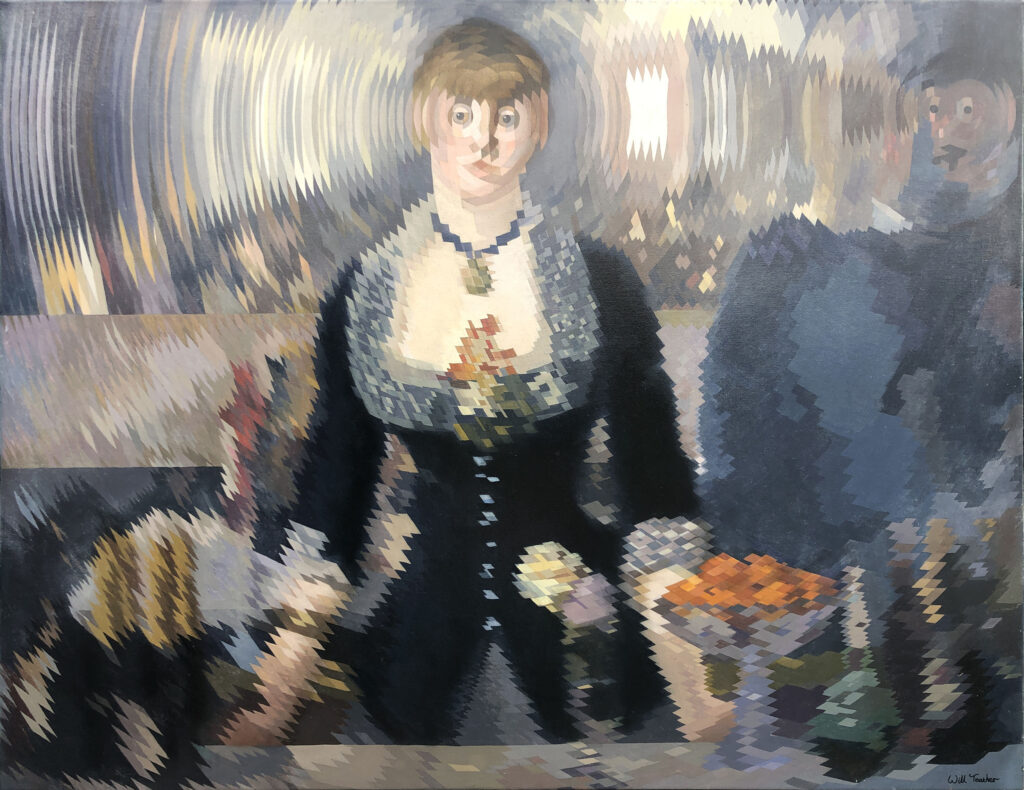

There are so many highlights in the work, both literal and metaphorical, that it seems a little petty to single out any particular format, but for me, the recent re-visions of great master portraits and self-portraits are simply exceptional. Squinting, we discern Rembrandt van Rijn, stirred if not shaken by the combined filtration of digital and analogue processing. Other recognisable classics, rendered impressionistic in lozenges of carefully nuanced hues, we recognize but are not specifically cognisant.
Neil Powell writes in Wall Street International

0 comments on “Fractal Paintings 2017 – 2021”